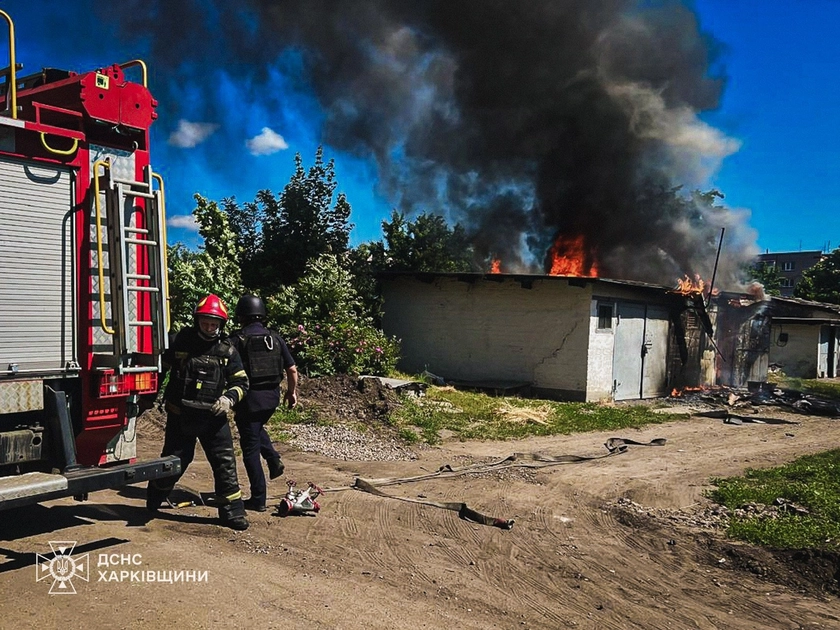



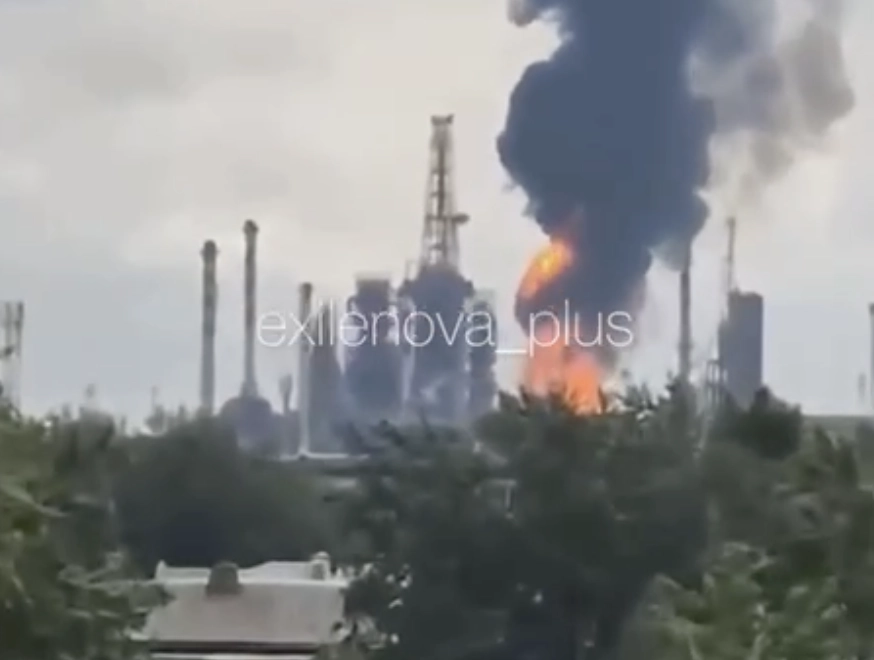
A coordinated long-range drone operation launched early Saturday morning, June 6, has damaged critical Russian naval facilities, domestic ammunition depots, and high-capacity oil refining networks across multiple regions of Russia and occupied Ukrainian territories.
Striking the Baltic Fleet hub and navy arsenal
Alexander Drozdenko, governor of the Leningrad region, stated that air defense units engaged a massive swarm of 88 drones, warning residents that the aerial engagement continued well into the morning. St. Petersburg Mayor Alexander Beglov also issued a statement confirming that the municipality had been subjected to a large-scale attack.
JOIN US ON TELEGRAM
Follow our coverage of the war on the @Kyivpost_official.
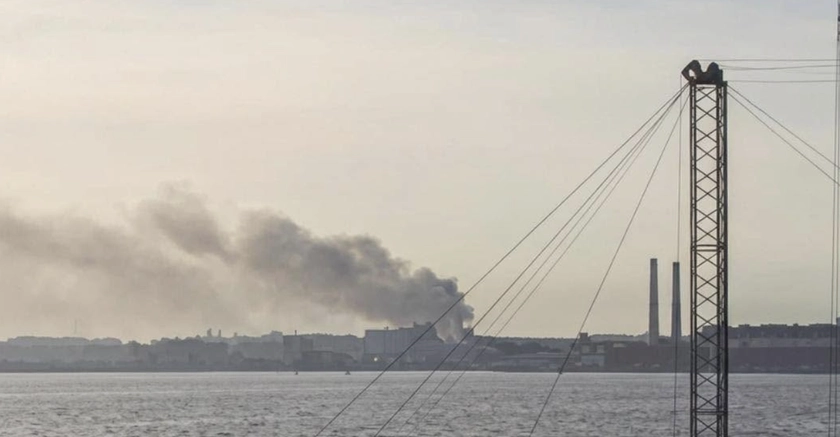
Local residents and monitoring channels documented significant fallout near the island city of Kronstadt, a strategic hub housing a major base for the Russian Navy’s Baltic Fleet. Drone impacts triggered a fire and a prominent column of smoke in the immediate vicinity of the Kronstadt Marine Plant. The industrial facility is responsible for the maintenance, repair, and outfitting of Russian surface warships and submarines.
Simultaneously, secondary drone waves struck the settlement of Lebyazhye within the Leningrad region. Operational reports indicate that the strike targeted the 15th Arsenal of the Russian Navy, impacting a critical ammunition storage warehouse.



Refineries and oil depots set ablaze
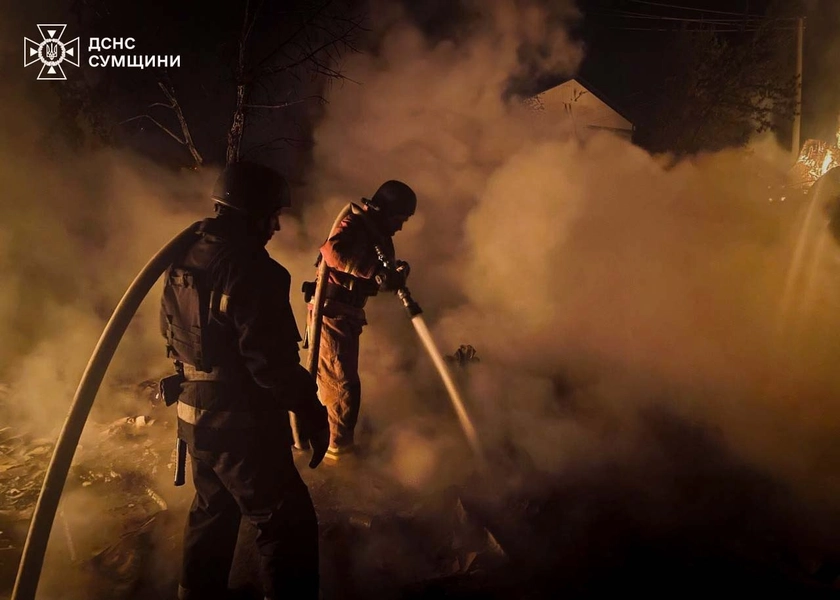
Beyond naval targets, the drone operation delivered a series of precise strikes against Russia’s sovereign energy sector and fuel logistics hubs. The Poltavskaya oil depot in the Krasnodar region was struck by multiple drones, sparking a fire that expanded to cover approximately 5,000 square meters.
Russian FPV Drones and Artillery Kill Two, Wound Four Civilians Across Ukraine
Operated by JSC Poltavskaya Oil Depot, the site features a storage capacity of 28 oil reservoirs totaling 14,950 cubic meters and serves as a vital fuel distribution lifeline for consumers across the Krasnodar Krai and the Republic of Adygea. Local emergency services confirmed the scale of the blaze but noted that no casualties had been reported among the staff.
Concurrently, the Antipinsky Oil Refinery in Tyumen – one of Russia’s largest privately owned oil processing enterprises – was also breached. Drones hit one of the refinery’s primary processing units, triggering an immediate structural fire at the facility, which maintains an annual processing capacity exceeding 9 million tons of crude oil to manufacture gasoline and diesel fuel.
Frontline seaports and industrial hubs breached
The Saturday drone campaign extended into neighboring industrial sectors and occupied maritime corridors. In the Tula region, local social media channels documented a series of loud explosions and subsequent structural fires inside the city of Uzlovaya.
Concurrently, a maritime strike targeted the temporary occupied Ukrainian port city of Mariupol. Drone units bypassed localized air defenses to detonate payloads directly within the Mariupol seaport, which Russian forces have routinely utilized to smuggle heavy military hardware, looted grain, and mineral resources out of the occupied Donbas region.
This aerial assault follows a previous long-range operation on June 3 that damaged the Russian corvette Boykiy within the same Kronstadt naval sector, underlining a systematic campaign to undermine Russia’s military logistics far behind the active front line.
You can also highlight the text and press Ctrl + Enter