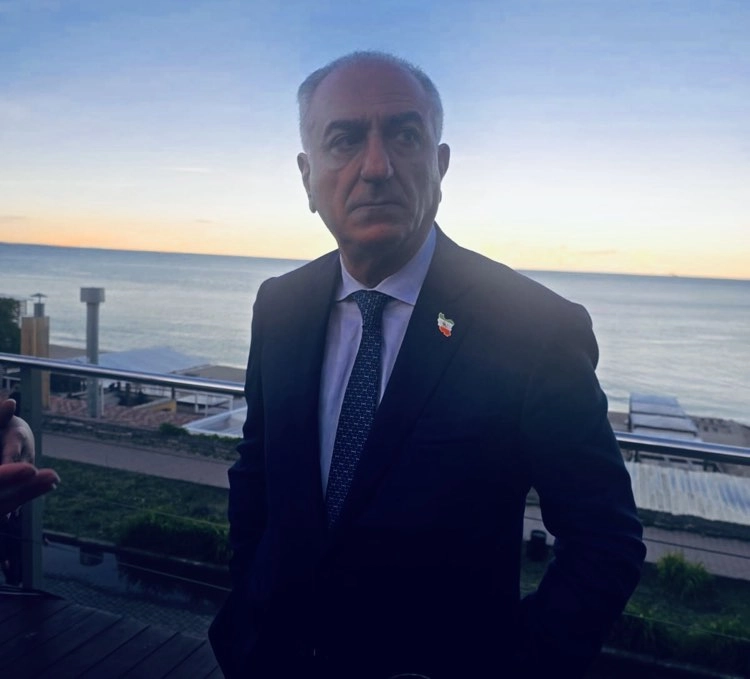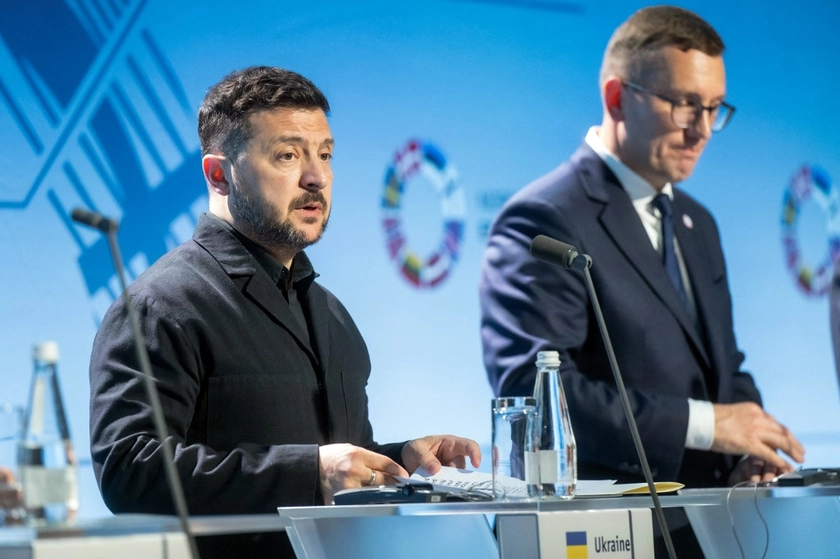



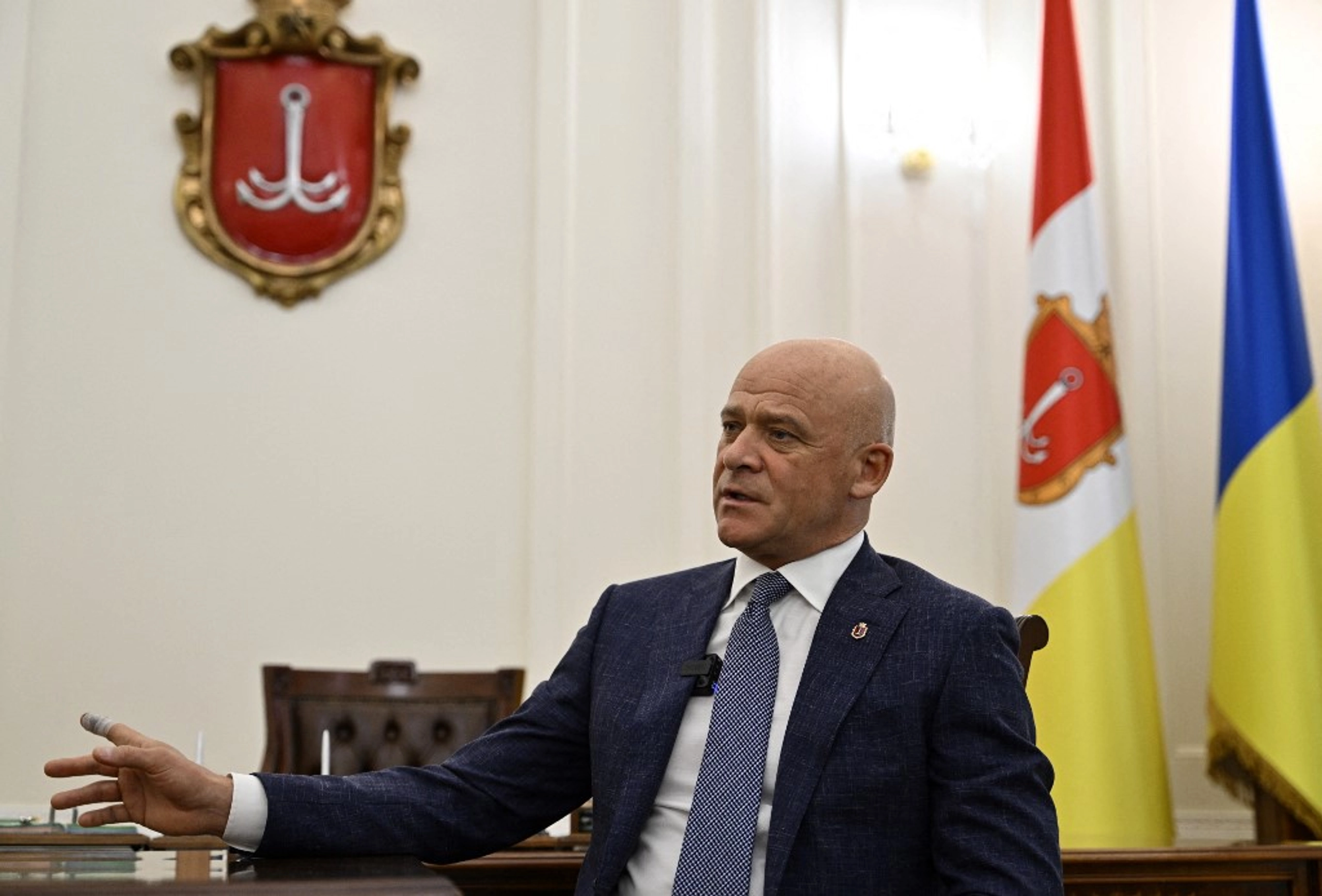
The mayor of Odesa – Ukraine’s fourth largest city with over a million residents, and a strategically important port – was deprived of Ukrainian citizenship by a decree issued by President Volodymyr Zelensky on Tuesday along with that of former MP Oleh Tsariov, and ballet dancer Serhiy Polunin.
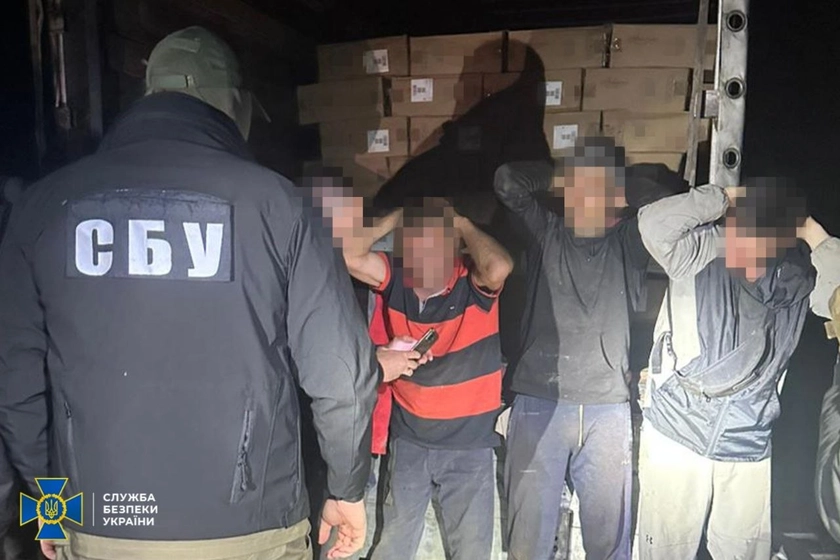
The reason – confirmed following an investigation by the Security Service of Ukraine (SBU) – was the illegal retention of Russian citizenship.
JOIN US ON TELEGRAM
Follow our coverage of the war on the @Kyivpost_official.
This extraordinary event is the latest in a catalogue of wartime clashes between central government and local regional and city-based authorities that has seen several mayors, including those from Chernihiv, Mukachevo, and Cherkasy, losing their positions. While there is an ongoing political confrontation between Zelensky’s team and the mayor of Kyiv, Vitali Klitschko.
The circumstances behind the removal of Trukhanov is unique but, under Ukrainian law, an individual that has been stripped of his citizenship, simply cannot serve as mayor.
Reaction to events
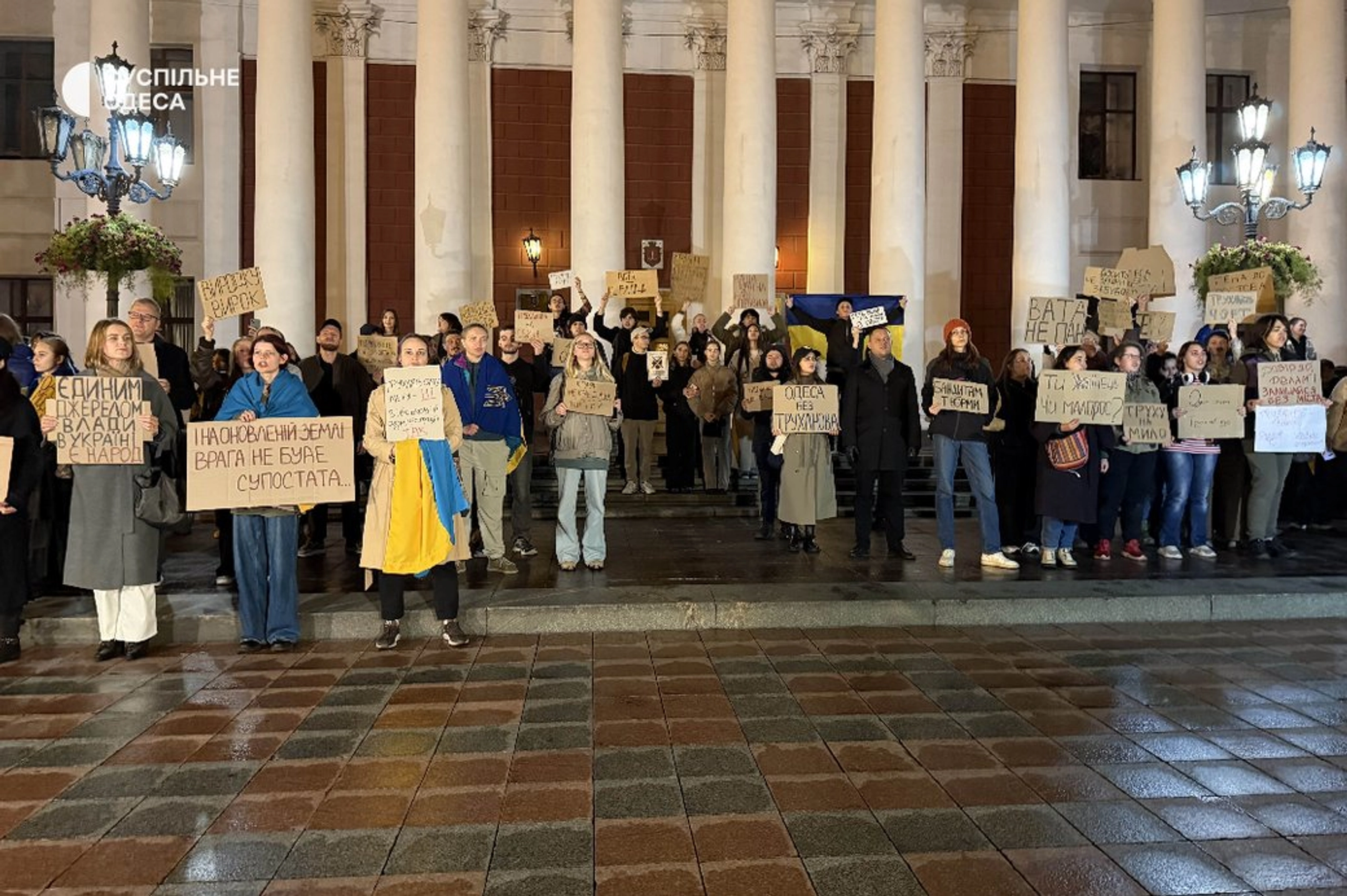
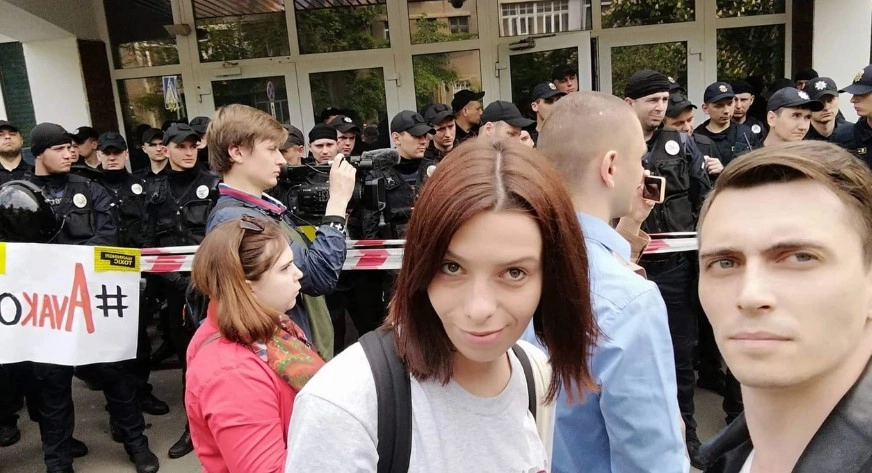
The response in Odesa was swift – on Tuesday evening students assembled in the city center demanding answers – why they asked had there been so little building development in Odesa and resistance to demands for the removal of Russian and Soviet symbols since the start of the full-scale war under Trukhanov? Predictably, the demonstration turned into a celebration of his dismissal.
Zaluzhny Tops Trust Poll as Military Leaders Outrank Ukraine’s Top Politicians
What led up to his loss of citizenship?
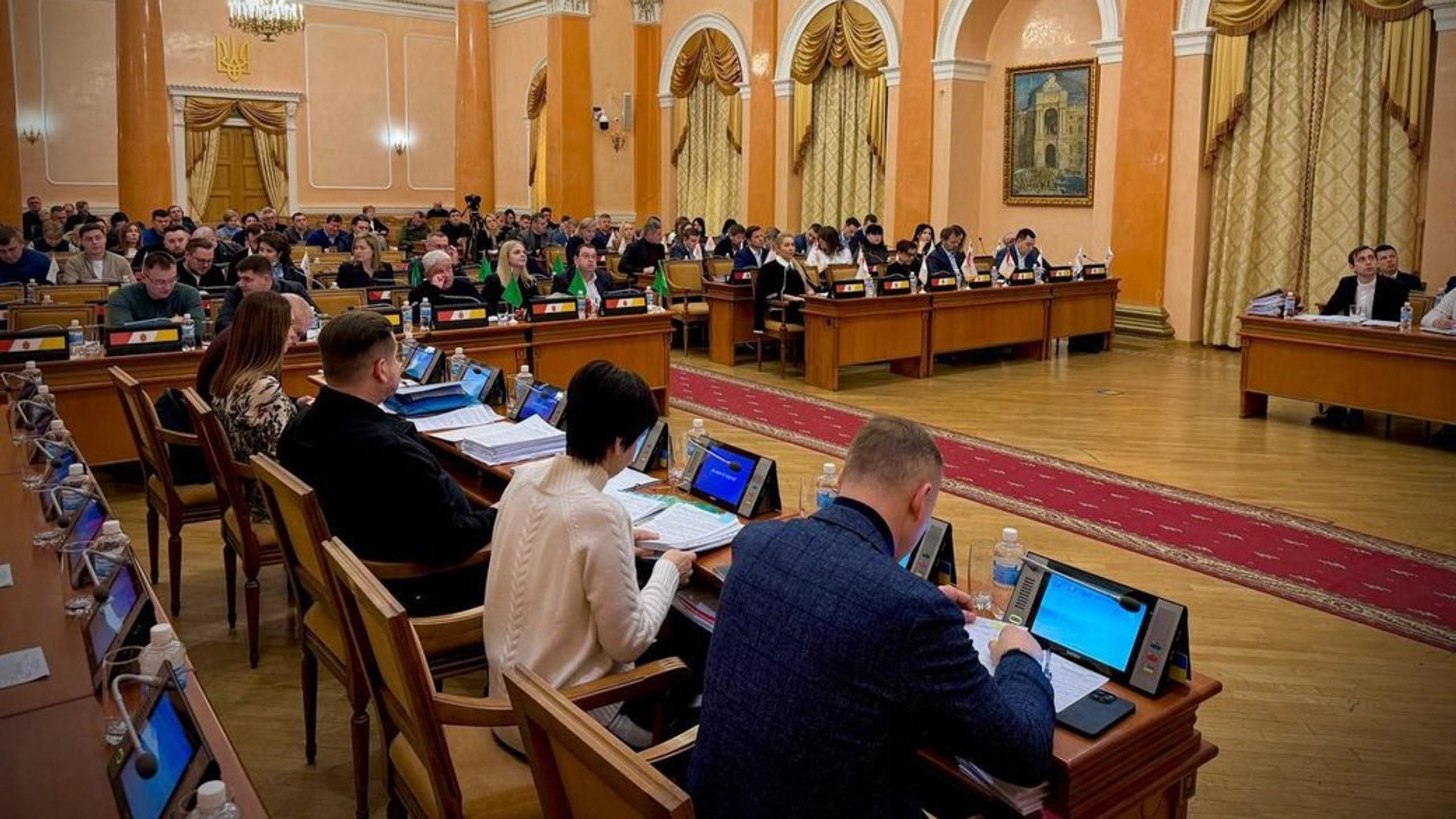
Trukhanov’s removal came as a shock to his supporters with many considering him as the untouchable “Lord” of Odesa, who held an unassailable majority in the city council made up by members of his party and its allies – practically no decisions were made without his say so or that of his inner circle.
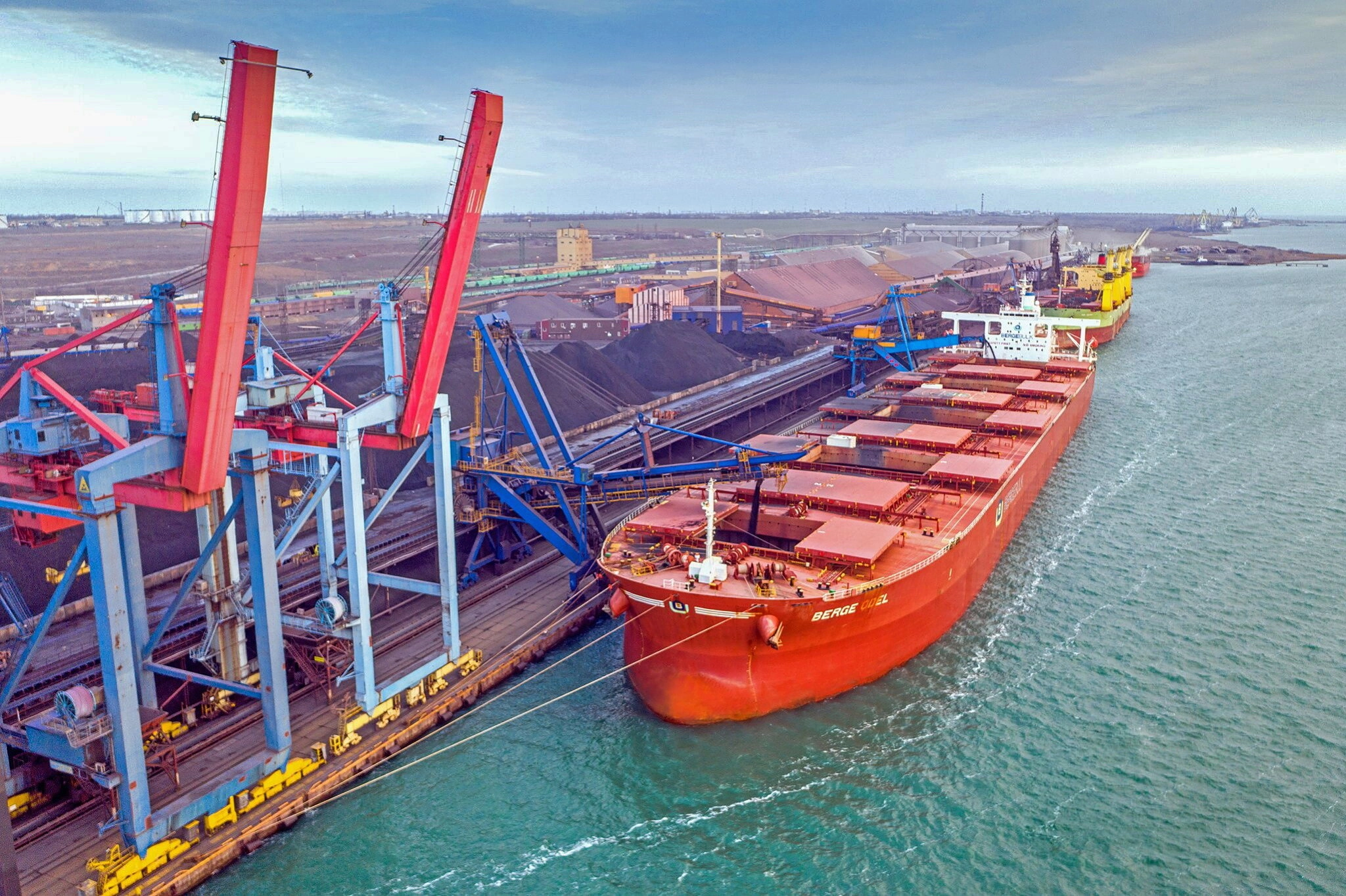
This political monopoly made most of Odesa’s business bureaucracy loyal to him – keen to make the most of the potential wealth generated by the opportunities available in the port city, especially for those engaged in export and import.
“There’s complete confusion in the city council now. No one knows what to do next. The mayor’s team has essentially fallen apart. No one, except perhaps his closest associates, has publicly declared support for him,” one Odesa city council member told Kyiv Post.
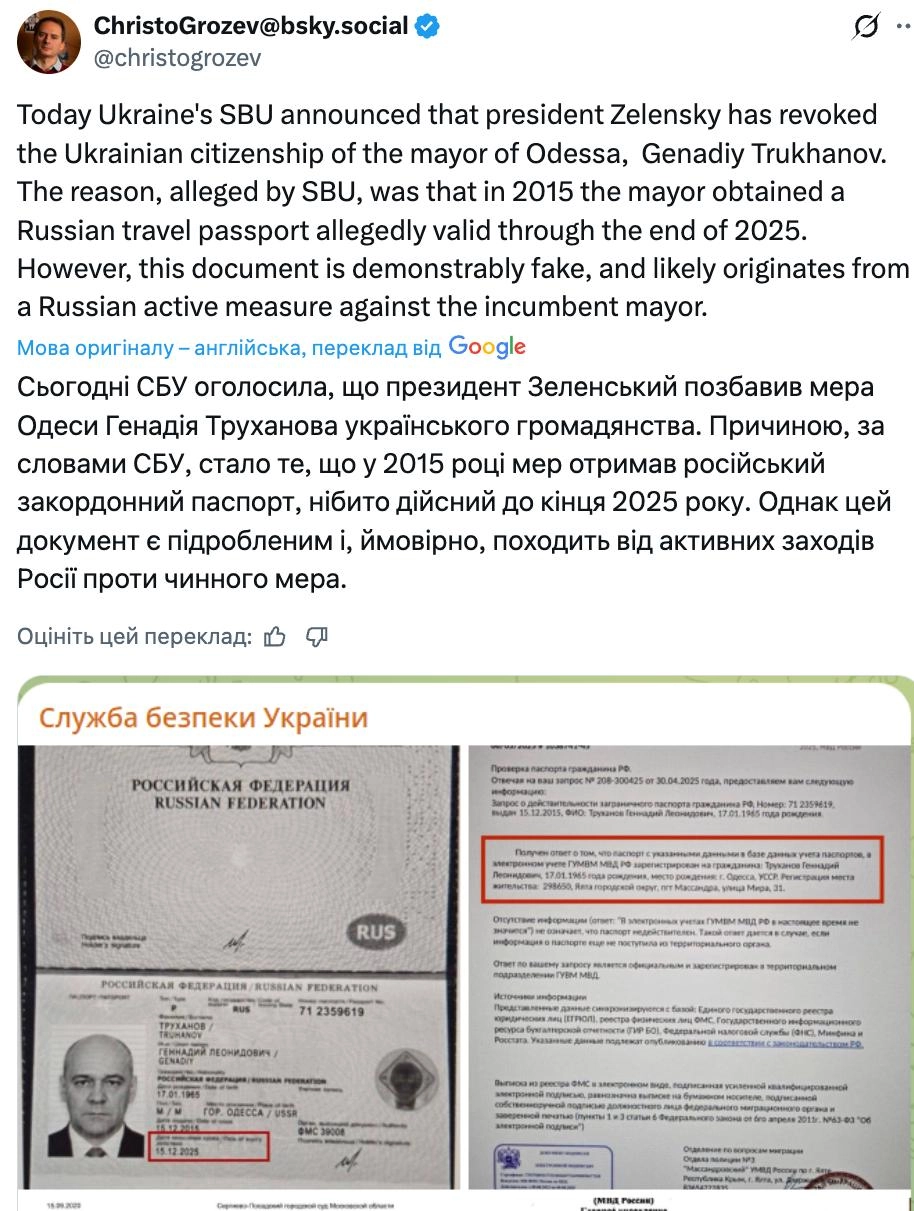
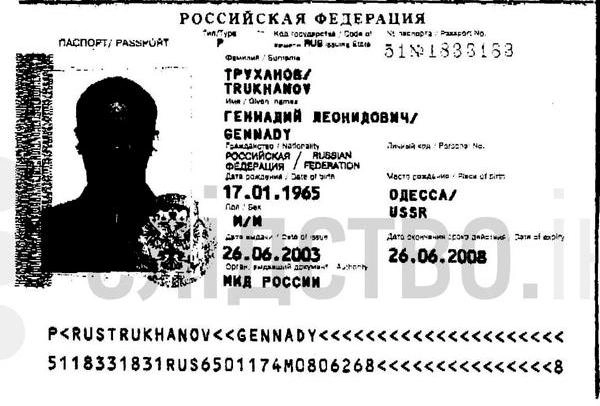
Trukhanov served as Odesa’s mayor from 2014 to 2025. The decision to strip him of citizenship was because he had retained his Russian passport – images of which published by the SBU.
Is Trukhanov’s Russian passport genuine
Christo Grozev the founder of Bellingcat said the image was fake, giving Trukhanov grounds to challenge the president’s actions in court.
Vladyslav Balinsky, an activist investigating 2014’s May 2 tragedy where 48 people died after violent clashes between pro-Russian and pro-Maidan groups, said there is ample evidence that Trukhanov remained a Russian citizen other than the passport.
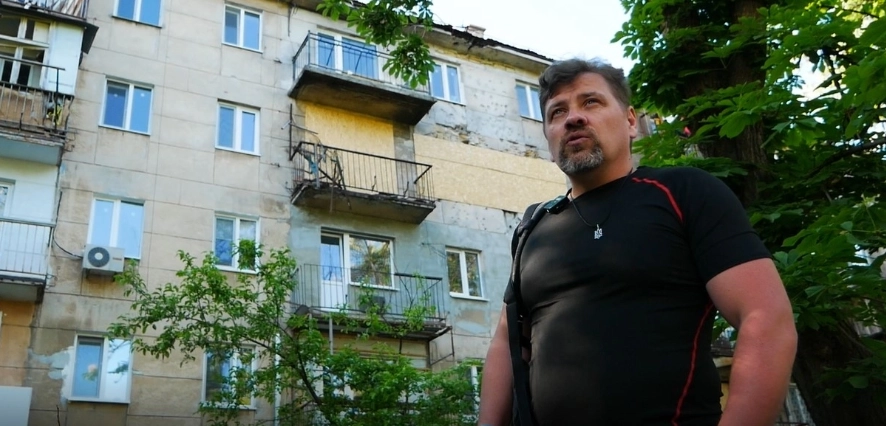
“He appears in the Panama Papers, published in 2014, multiple times, where he’s listed as a Russian citizen. Later, in 2018, information about his Russian citizenship surfaced again,” says Balinsky.
This being the case there remain questions why this was not uncovered in the intervening decade as allegations of criminal activity and corruption against Trukhanov have frequently been raised and (supposedly) investigated.
To understand why it is necessary to take a closer look at Trukhanov himself and the situation Odesa found itself over those 10 years.
H2:: The rise of Trukhanov and his effect on Odesa
Hennadiy Trukhanov did not widely feature in Odesa’s political scene until the early 2000s when he was made a member of the Odesa city council and simultaneously an assistant to a member of Ukraine’s parliament, the Verkhovna Rada.
In 2010, he became the head of the Party of Regions in Odesa – the ruling party of pro-Russian politician Viktor Yanukovych, who had recently won the presidential election.
Trukhanov established himself as an active figure in the pro-Russian nostalgia scene – which had long portrayed Odesa as a “Russian” or “international” city with a vibrant history that attracted people of many ethnicities taking advantage of its spontaneous development and economic boom. This narrative served to blur the fact that Odesa is, first and foremost, a Ukrainian city.
Propagandists painted the idea of a Ukrainian identity, as “narrowly nationalistic” and “hostile” to the “multinational” spirit of the port and resort city, promoting a cult of local identity – claiming Odesa had its own distinct history, traditions, and even language. Many older Odessans indeed spoke a unique dialect formed from a mix of Yiddish, Ukrainian, Russian, Romanian, and French.
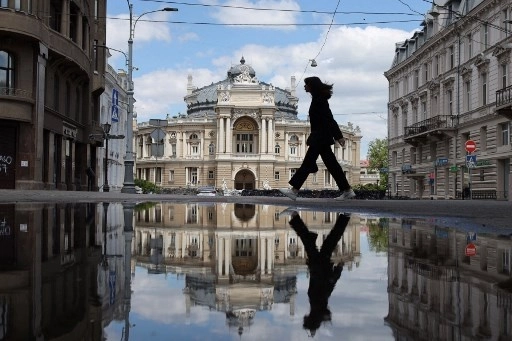
Sources in Odesa said that Trukhanov appealed to these nostalgic and “separatist” sentiments.
“As soon as the Russians’ open attempt to organize a pro-Russian uprising in Odesa in early May 2014 failed and ended in the May 2 tragedy, Trukhanov and his party ‘Trust in Deeds’ quickly gained momentum, exploiting the theme of ‘peace. .”
“I don’t think it was a coincidence. Whether Trukhanov merely capitalized on the mood or Russia launched an alternative scenario, it’s clear that this wasn’t random,” Balinsky believes.
His party “Trust in Deeds” that emerged after 2014 was in fact a rebranded group made up of local members of Yanukovych’s Party of Regions loyal to Trukhanov.
Trukhanov focused on the “native” electorate of middle and older generations who remembered the “old days” with many of his actions fostering disapproval among pro-Ukrainian activists.
Balinsky says Trukhanov as mayor proved to be pro-Russian and ineffective, and gave examples:
“This isn’t just [because he’s] a Russian citizen – many Russian citizens have sincerely fight for Ukraine. But this particular Russian citizen [Trukhanov] spoke in 2014 about the right for ‘self-determination of Crimea,’ sabotaged attempts at ‘decommunization,’ and resisted the renaming of streets.”
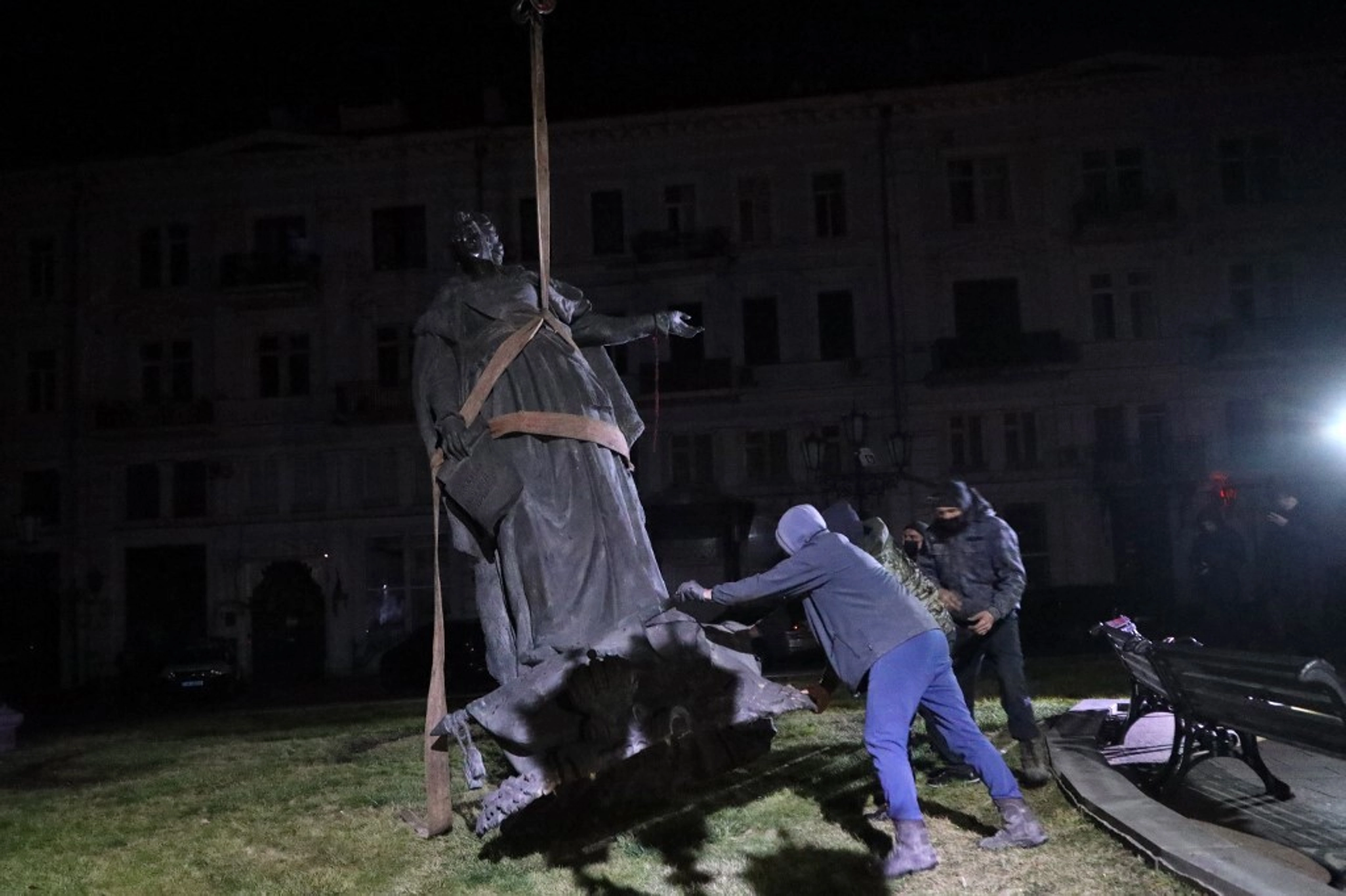
When attempts were made to change Marshal Zhukov Street – named after the ruthless Soviet World War II commander – to that of Ukrainian Cossack hero Semen Paliy, Trukhanov went to court to retain the old name.”
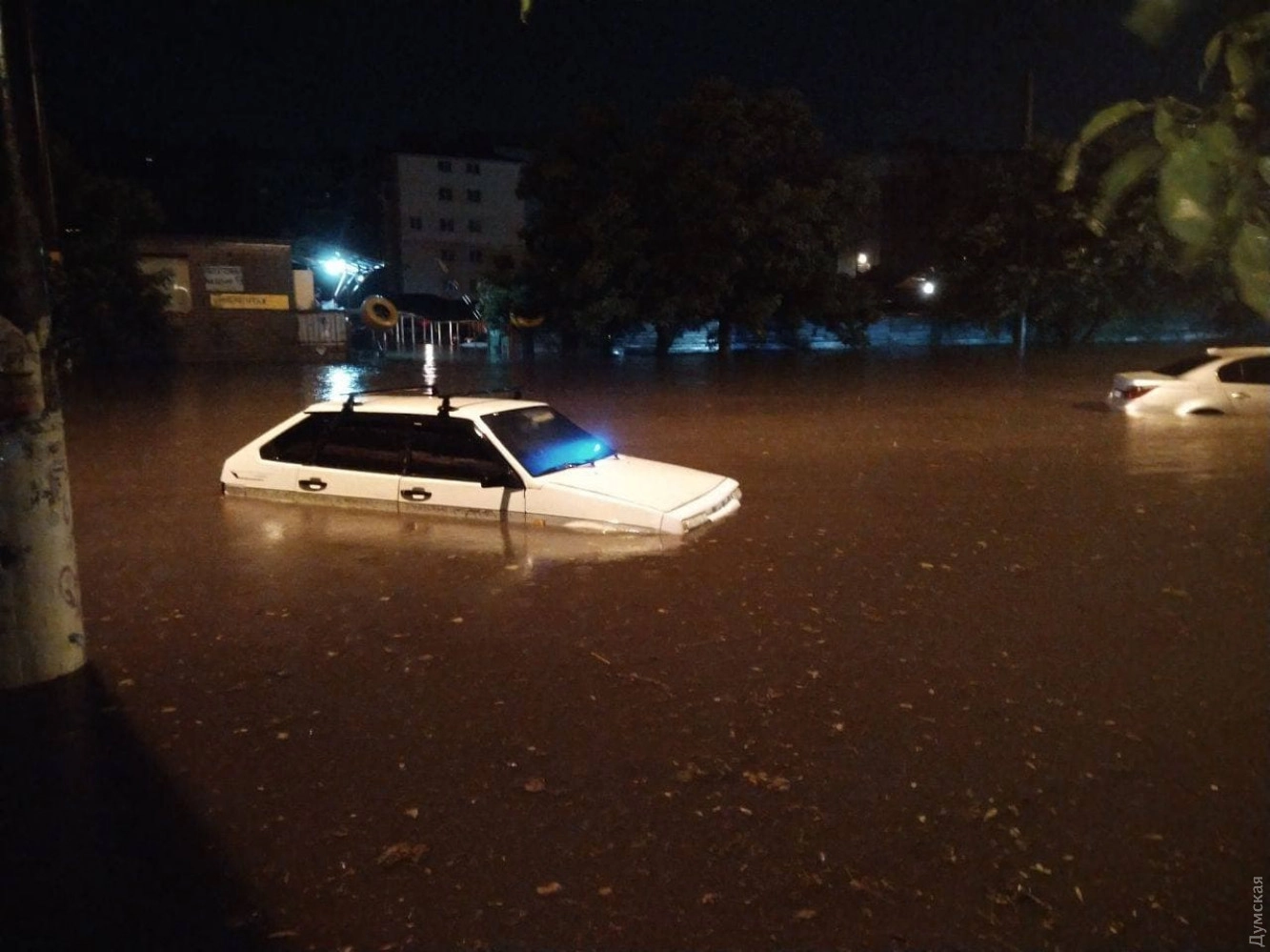
“In early 2022, he waited to see how the invasion would unfold. While other mayors took a patriotic stance and did all they could to prepare defenses he did nothing so when the flood came – disaster – something that simply wouldn’t have happened in a city where local authorities paid even minimal attention to infrastructure.”.
Despite all this, Trukhanov remained “untouchable” until now. So what changeed?
H2:: Pluses and minuses
All of Kyiv Post’s Odesa sources say the same thing – Trukhanov stayed (on the surface) loyal to the central government, which is why he was tolerated for so long. However, he eventually became too independent – not politically, but administratively.
“He didn’t communicate with the central government, didn’t cooperate with the regional administration – which also has its own issues – but we are at war, and we need unity. Yet with Trukhanov, there were many points of conflict points – with the pro-Ukrainian part of the city, with the authorities, and with the military,” one city official said.
Odesa journalist and civic activist Kateryna Madens notes there were numerous complaints about Trukhanov from the military.
“For example, the entire Odesa coastline is protected by a dome-shaped electronic warfare (EW) system designed to stop waves of Russian drones flying from Crimea across the sea – the only gap in which is in the city itself.”
No matter how much the military asked Trukhanov to help with this, he refused. There were complaints from brigades about his unwillingness to cooperate, and there was no coordination with the central government. It’s as if he created a separate state here, isolating himself – an unacceptable state of affairs during wartime,” Madens says, adding that move by central government against Trukhanov was only a matter of time.
“The central government has been creating military administrations in all frontline cities, consolidating power in the hands of representatives of the center. Odesa is also a frontier – just over 100 kilometers (60 miles) in a straight line from Crimea – and we need coordinated [defensive] management,” one Odesa city official said.
Another possible cause of Trukhanov’s downfall was the flood in Odesa — a natural disaster that struck the city on Sept. 30, 2025, when in just a few hours, more than a month’s worth of rain fell, killing at least 10 people. A disaster for which the public held Trukhanov responsible.
“There was a lot of pretend action in Odesa, and very little real work was done to build defenses or protective infrastructure. That should also be taken into account,” Balinsky says.
H2:: Not all support Trukhanov’s removal
Many members of Ukraine’s political opposition, particularly those MPs from former president Petro Poroshenko’s party, see this is a sign of a power grab by President Zelensky aimed at increasing his control over local government.
MP Oleksiy Honcharenko of the European Solidarity party says, “Whether someone likes it or not, Trukhanov was elected by the people of Odesa. Besides, he was born here. Remove Trukhanov? Fine – do it legally.”
“There are many questions for him, and there are criminal cases. So investigate, prove it, and take it to court. Open the hearings publicly so his voters can see what happened. If he’s guilty of something – let the court sdecide. That’s how it works in a democratic, law-based state.”
“What do we have now? Today they take away Trukhanov’s citizenship, and everyone cheers because he’s ‘bad,’ but tomorrow this repressive machine could be used against inconvenient people,.”
Serhiy Hnezdilov, an activist from Odesa region and a serving soldier, in turn finds it strange that Trukhanov is being removed, not as a result of numerous allegations of his corruption but for holding a Russian passport.
One of the student protestors agreed that this was the youth of Odesa’s main demand – not only should Trukhanov have been removed but his corruption cases should brought to trial, so he can’t return to power in the city after President Zelensky’s term in office ends.
H2:: What’s likely to follow?
Madens believes that Trukhanov’s supporters on the city council will be able to help him. They must endorse his removal from office – it is impossible for a mayor deprived of citizenship to remain in office.
“But even if they don’t vote, a head of the city military administration can be appointed from above, without a council decision. And the council itself can be declared incapable – and that’s that,” she says.
As expected, on Oct. 15, a city military administration was established in Odesa, headed by Serhiy Lysak –an experienced official, SBU officer, and general who previously led the Dnipropetrovsk Regional Military Administration from 2023 to 2025.
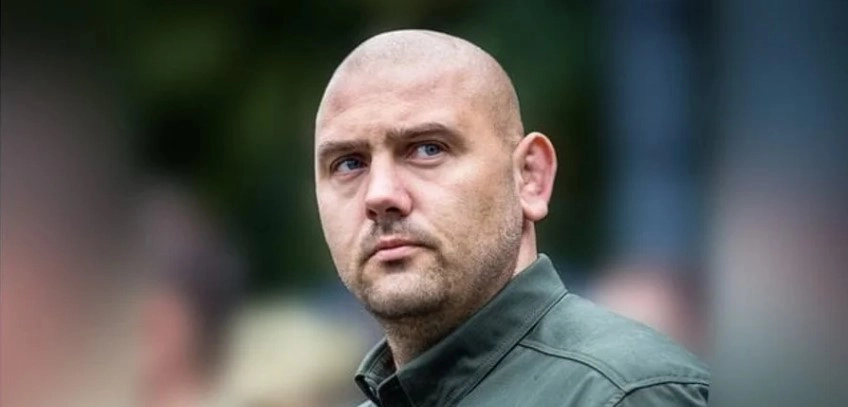
“Odesa deserves greater protection and greater support. This can be done in the format of a military administration – too many security issues in Odesa have remained without an adequate response for far too long”, Zelensky said in his message.
All Kyiv Post’s respondents expect him to strengthen the city’s defenses, improve coordination with central government, and ensure that “frightened city officials will steal less.”
“The good news is that he’s a patriotic, pro-Ukrainian figure, experienced and well-connected with the President’s Office, so governance in terms of security and cooperation with the regional administration will likely improve. But the bad news is also that – he’s a person of the President’s Office, loyal to Yermak [Andrii, Head of the Ukrainian President’s Office] and Tatarov [Oleh, Yermak’s deputy], while the regional administration is also close to the Office. One way or another, Lysak will have to rely on Odesans and nationally conscious citizens of the city,” Balinsky believes.
You can also highlight the text and press Ctrl + Enter