



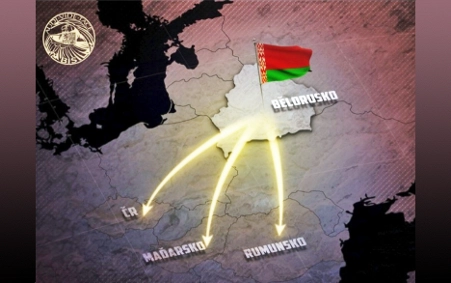
The Czech Security and Information Service (BIS) reported on X on Monday that –together with their counterparts in Romania, Hungary, and Moldova – it had identified and removed a Belarusian spy network operating in Europe.
According to the BIS, the Belarusian KGB – Minsk’s foreign intelligence agency – had been actively seeking to recruit agents and to obtain sensitive security, technology and military information.
JOIN US ON TELEGRAM
Follow our coverage of the war on the @Kyivpost_official.
The joint four nation team– supported by Eurojust, the European Union Agency for Criminal Justice Cooperation – had identified several KGB officers and collaborators in several European countries.
The most senior agent was a former deputy head of Moldova’s intelligence service, Alexandru Bălan, who is accused of passing both Moldovan and Romanian classified information to Belarus.
Bălan was arrested on suspicion of treason by Romania’s anti-organized crime agency, DIICOT, accused of working for the KGB from early 2024. According to Moldova’s IPN news service he was said to have met Belarusian intelligence officers in Budapest on at least two occasions where it is believed he passed secrets and received payments for his services.
Meanwhile the Czech foreign ministry said on Monday it was expelling a Belarusian intelligence officer, who had been carrying out espionage activities in Prague under diplomatic cover, giving him 72 hours to quit the country.
Hungary Says It Has Deal With Ukraine on Minority Rights, Ties It to EU Accession Talks
The head of the BIS, Michael Koudelka, said that the spy network was able to operate widely throughout Europe because they had been granted free movement. He said: “To successfully counter these hostile activities in Europe, we need to restrict the movement of accredited diplomats from Russia and Belarus within the Schengen area.”
Czech Foreign MInister Jan Lipavský supported the BIS assertion saying, “Agents covered by diplomatic privileges must not have free rein across Europe. I will continue to push at the European level for the relevant restrictions, primarily against Russian diplomats.”
Belarus, under its authoritarian President Alexander Lukashenko, is closely allied to Russia through the relationship called “The Union State.” Belarusian territory was a staging ground during Moscow’s February 2022 full-scale invasion of Ukraine and has accepted the stationing of Russian tactical nuclear missiles on its territory.
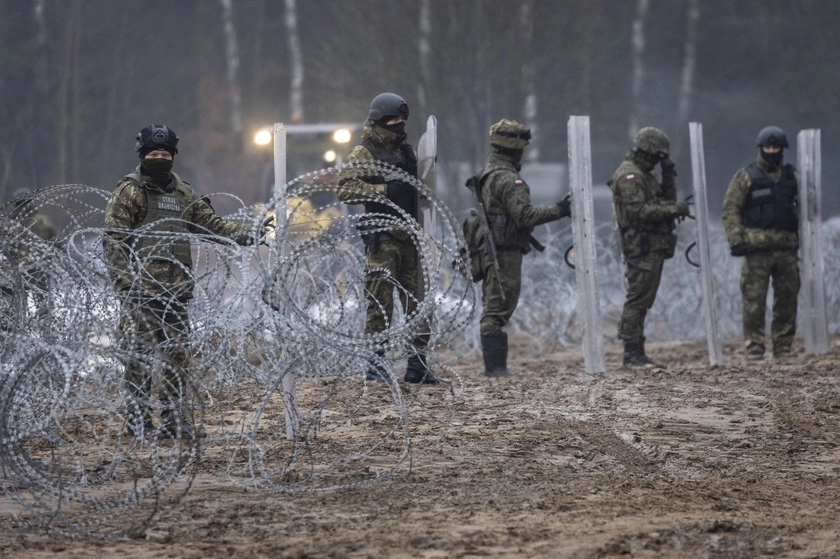
On Tuesday Polish Prime Minister Donald Tusk said Poland would close its border with Belarus on Thursday at midnight because of the Russian-led Zapad 2025 strategic military exercise a scheduled to run Sept. 12–16.
The exercise, along with the disruption of the Belarusian KGB instigated spy ring – investigations into which are continuing according to the Eurojust website – marks a further deterioration of the relationship between Minsk and the West.
You can also highlight the text and press Ctrl + Enter