


Oksana Melnyk, director of the Tlumach Primary Medical Care Center (TPMC) told the Suspilne news outlet that the rural community her facility serves in the Ivano-Frankivsk region will start to deliver medicines and other related necessities using drones from this coming April. This will be the third time such a system has been used to support hard to reach areas of the country.
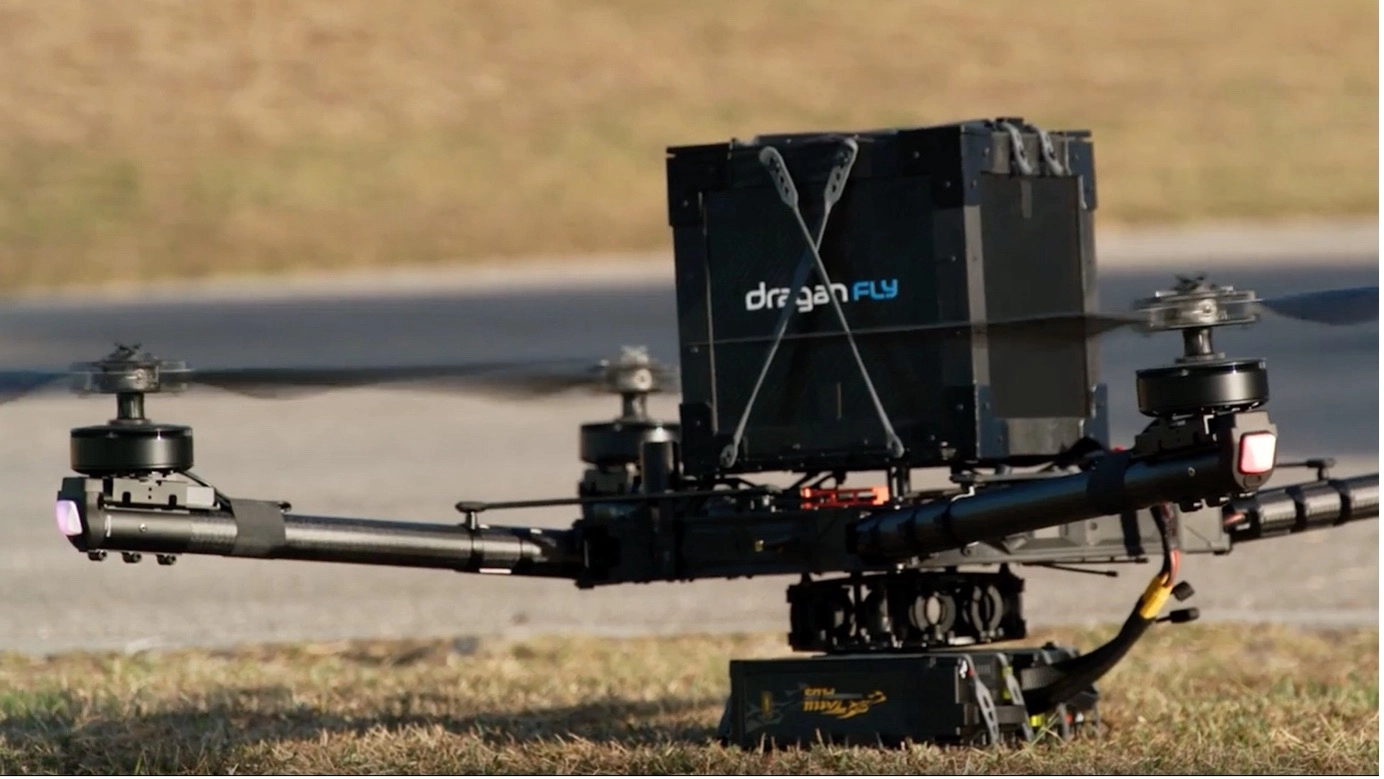
In May 2022 the Canadian drone manufacturers Draganfly in partnership with Coldchain Delivery Systems, specialists in transporting temperature-sensitive medical material, deployed specially designed medical response drones to Ukraine. The company then trained wounded Ukrainian servicemen from the “Revived Soldiers Ukraine (RSU)” charity to operate and maintain the drones.
The quadcopter drones feature a temperature-controlled payload box that can carry around 16 kilograms (35 pounds) with a range of 20 kilometers (12.4 miles). The drones use proximity sensors that allow the payload to be safely dropped few feet above the ground reducing the “dwell time” for the drones in hostile environments.
The charity purchased 10 of the UAVs to supplement the initial five provided by Draganfly, the first of 200 UAVs to be provided to support operations close to the front line in eastern Ukraine – each drone flying up to five sorties a day.
Italy, France Reject EU Proposal to Ban Ex-Russian Soldiers
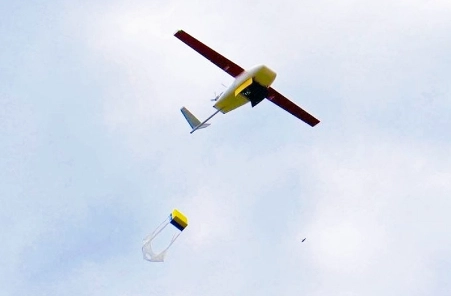
A medical delivery drone serving Bucha releases its payload. Photo: Telegram
The second reported deployment was the use of drones to deliver medicines, blood components and other medical supplies to hospitals in Bucha in the Kyiv region as they recovered from the atrocities and damage inflicted on the community by the Russian occupation in the previous year.
One of the issues Draganfly identified was the initial concern caused by the presence of their drones in areas where attack drones were prevalent. This required very close coordination between the dispatching and receiving units to ensure the drones weren’t shot down.
In Bucha, which was no longer within range of the enemy, the drone users took no chances of that happening. They ensured that the fixed-wing drones used in their project were readily identifiable – along with bright red wings the drones are adorned with the yellow and blue Ukrainian flag.
Each drone flies several missions a day at an altitude of up to 300 meters (1,000 feet) before descending to around 30 meters (100 feet) where they release their payload contained in yellow and blue boxes on a parachute, with flights coordinated with the region’s military units.
The new service in Tlumach has been planned for some time and is necessary because many villages in the surrounding area have no on-site pharmacy and can have to travel up to 50 kilometers (30 miles) to collect medicines. Melnyk said that the affected areas had been surveyed to identify those that would benefit most from the service.
“This humanitarian project will allow people to receive medicine at their place of residence, and will save time, physical assets, and funding,” she says.
The service is free of charge funded by US and other charitable organizations and can be ordered through the patient’s family doctor through the government “Affordable Medicines” program.
Medication delivered by drones will be received by trained medical workers volunteering with the TPMC.
“The orders for each patient will be sealed and labelled, collected by a nurse or doctor, who will then deliver them to the patients’ addresses or inform them of the arrival so they can pick them up from an outpatient clinic,” Melnyk said. She added that a similar method is currently being worked on within the nearby Rivne region.
The use of drones for military purposes has captured the headlines as a result of their widespread successful use by both sides in Russia’s war on Ukraine. This overlooks the fact that UAVs had been used for several years in support of agricultural work, infrastructure inspections, mapping, and other tasks where remote access was essential.
It is in the area of potentially life-saving medical supply delivery that drones could also have a major real-life impact – not only in Ukraine and other war zones, but also in developing countries that lack the infrastructure to support remote communities.
You can also highlight the text and press Ctrl + Enter

Attack on Moscow Oil Refinery: Putin Under Pressure?