

Peter Gelb, general manager of New York’s Metropolitan Opera, has used the influence of one of the world’s most prestigious cultural institutions not only to defend artistic freedom but also to amplify Ukraine’s voice on the global stage since the start of Russia’s 2022 full-scale invasion.
The Metropolitan Opera (commonly referred to as the Met) was among the first major cultural organizations to condemn Russia’s aggression and sever ties with artists who supported the Kremlin. Gelb also made a powerful statement of solidarity by inviting Ukrainian soprano Liudmyla Monastyrska to perform at the Met shortly after the invasion began, personally bringing a Ukrainian flag onto the stage during curtain calls.
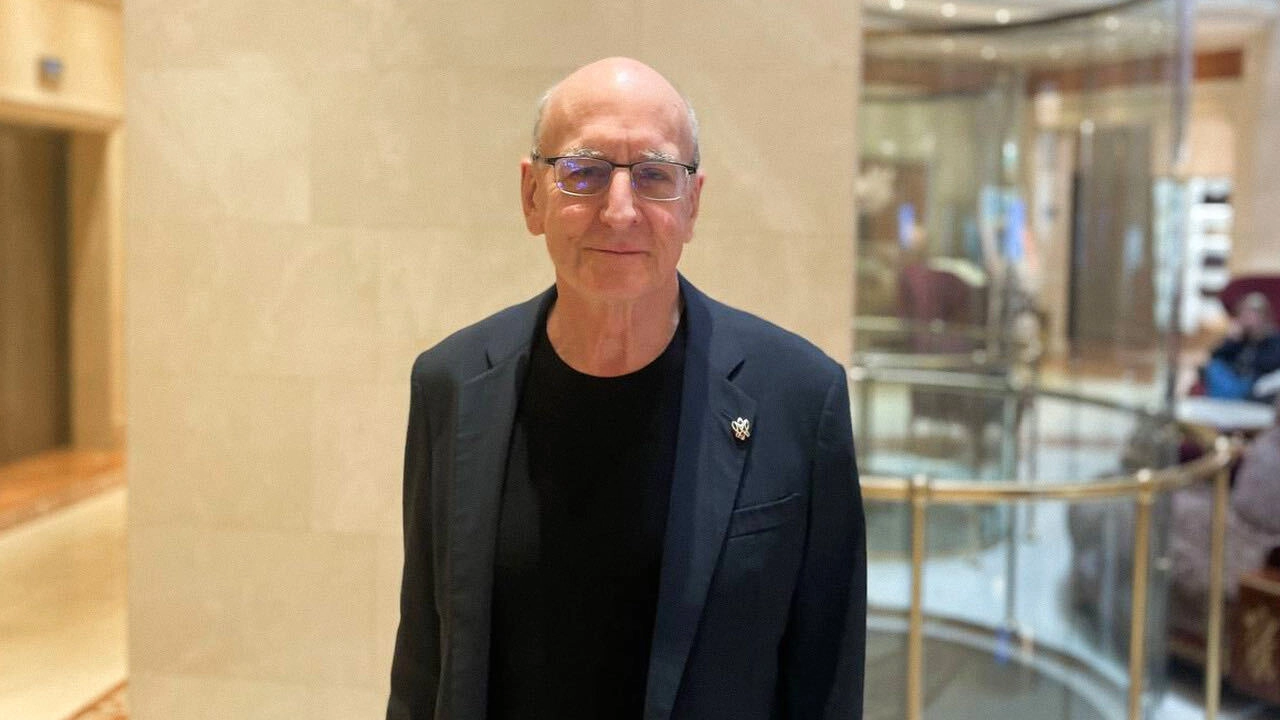
In the years that followed, the Met continued to deepen its engagement with Ukrainian artists, including renowned conductor Oksana Lyniv.
Under Gelb’s leadership, the Metropolitan Opera has also championed new works that address the realities of Russia’s war against Ukraine. Among them is “Mothers of Kherson,” a new opera by Ukrainian composer Maksym Kolomiiets that tells the story of Ukrainian children abducted by Russia – a work intended to keep international attention focused on Ukraine’s struggle for freedom.
Ukraine Apologizes to Greece Over Armed Sea Drone Found Near Lefkada
Ahead of the Kyiv presentation of “Mothers of Kherson,” Kyiv Post spoke with Peter Gelb about the role of opera in times of war, cultural diplomacy, and why Ukraine’s story must continue to be heard around the world.
Kyiv Post: You have visited Ukraine several times since the start of Russia’s full-scale invasion. How have those visits changed your understanding of the war and Ukrainian society
Peter Gelb: Well, I am of Slavic blood. I mean, I grew up in New York, but I spent a lot of time in Eastern Europe for my work. I spent a lot of time in the Soviet Union in the 1980s, 1990s, making documentary films and creating special projects. In fact, I was in Moscow right up until the moment of the invasion in 2022.
You know, I didn’t know Ukraine very well. I’d never been to Kyiv before. I found what I’ve learned over the past year, since the invasion, is how incredibly strong the Ukrainian people are.
I mean, I know they suffer terribly, and they’ve suffered great deprivation. But the fact that this city wakes up every morning after the most horrendous attacks and bombs… and people try to resume their lives in a normal way, whereas obviously nothing is normal. But they live not in fear, they live in strength and resolve and hope.
The fact that they never give up shows a strength and resolve [that] I’ve learned about and… respect and admire so greatly. There’s no benefit to this war. This is a terrible war, a horrible war.
But one aspect of it that I am proud to have played a part in is to help demonstrate to the world that Ukrainian culture not only exists, but that it is of great value and that it is flourishing.
I think that Russia and the ex-Soviet Union, which prided themselves so much on Russian culture and using Russian culture as a kind of demonstration, or a weapon to demonstrate the superiority or the excellence of Russian culture, have met their match with the Ukrainian efforts to demonstrate its own cultural heritage. So I’m very happy that I can help with that effort.
I know how strongly the Russians use art as a tool of propaganda, and I’m very glad that we can assist Ukraine in demonstrating to the world that Ukrainian art, whether it’s music or theater or visual art or film, is powerful and will not be undermined or crushed by the Russian aggression.
The Metropolitan Opera commissioned “Mothers of Kherson” to bring the story of Ukraine’s wartime tragedy to international audiences. What can opera express about the tragedy of Ukraine’s stolen children that other art forms cannot, and why was it important for this work to be performed in Kyiv?
Well, I think this work was originally not intended to be performed in Kyiv first.
It was originally commissioned by the Metropolitan Opera together with the Polish Opera to be performed internationally, to demonstrate to the world through art… the incredible depths of inhumanity that went into and is still ongoing, of the abduction of all these tens of thousands of children.
I don't think opera alone is the only art form that can bear witness to the terrible tragedies of humanity that are taking place in this war.
When I was here last June, I had a meeting with the First Lady of Ukraine, and we were discussing this opera that we were commissioning. And I said, you know, I thought it would be interesting if… we’re producing this opera at record time… it takes usually much longer.
And I thought it would be interesting for Ukrainian citizens. Obviously, in Ukraine everyone knows this story, so we’re not telling something new, but I think it’s good for Ukraine to know that at a time when there’s concern that people are forgetting about what’s happening in Ukraine, what’s happening in this war, because it goes on and on… this war is now longer than World War II, I think… it’s good for Ukrainian citizens to understand that there are efforts being made.
I mean, even if the US government has stopped helping Ukraine, the fact that its premier arts institution has never given up in supporting Ukraine, and that we’re bringing this story to the world… I think by doing it here, first [it] shows the Ukrainian people that the world has not forgotten them.
I don’t think opera alone is the only art form that can bear witness to the terrible tragedies of humanity that are taking place in this war. But I think it’s one of the forms.
Obviously, there’s great expression through visual art. You take a film like “20 Days of Mariupol,” which had enormous attention, it’s an excellent film… Going back to the ancient Greeks, art has always been a record of life and of the most difficult situations in life.
In the 19th century, Beethoven wrote his opera Fidelio, which was about tyranny. It was a cry against tyranny. Puccini wrote Tosca as a cry against the tyranny of oppression.
Operas today can also bear witness to tragedies, but obviously for them to… It’s very different, it’s very different [from] the newspaper journalists cover tragic events… Unfortunately, there’s so much tragedy happening in the world today that there’s this 24-hour news cycle. It just keeps turning over and over and over again.
It’s important to also have art, hopefully great art, that can bear witness for all time.
The Ukrainian Freedom Orchestra has become one of the most visible cultural initiatives born during wartime. What role do you believe culture and music can play when diplomacy and politics alone seem insufficient?
Obviously, the musicians in the Ukrainian Freedom Orchestra are not fighting the war. They can’t. The most heroic actions, the most important deeds that are being done in this war are [taking] place at the front lines, where the soldiers are giving, risking their lives.
I think that we can support… the Ukrainian Freedom Orchestra can support their efforts and give them hope, too. Music performed by these wonderful musicians who come from orchestras all across Ukraine, as well as the Ukrainian diaspora outside of Ukraine.
The fact that they come together, they perform music, not only music that is about heroism, like Beethoven’s Fifth Symphony, where this year’s program includes Beethoven’s Seventh Symphony, but also the premieres of new works of the modern Ukrainian composer Bohdana Frolyak, [who] has written a brand new work called “Gloria,” that will open one of the programs.
Opera cannot exist in a vacuum, it has to be connected to the world.
I think it gives hope to Ukrainians who are fighting, and it also shows the artistic will of the Ukrainian people. And again, it’s functioning as a kind of cultural ambassador in a time of war.
Has your collaboration with Ukrainian musicians and performers changed the way the Metropolitan Opera thinks about international partnerships, the social role of opera itself?
Certainly, as I’ve had my job for 20 years at the Metropolitan Opera, I’ve always believed in connecting art to people in meaningful ways, from the very beginning of my career, long before I went to work for the Met.
But in recent years, as I see the incredible social upheaval and the injustices being perpetrated around the world to a greater degree in recent years than in any other time in recent history, I think the role of the Metropolitan Opera and the role of the arts in general has to be much stronger in terms of representing truth and social justice.
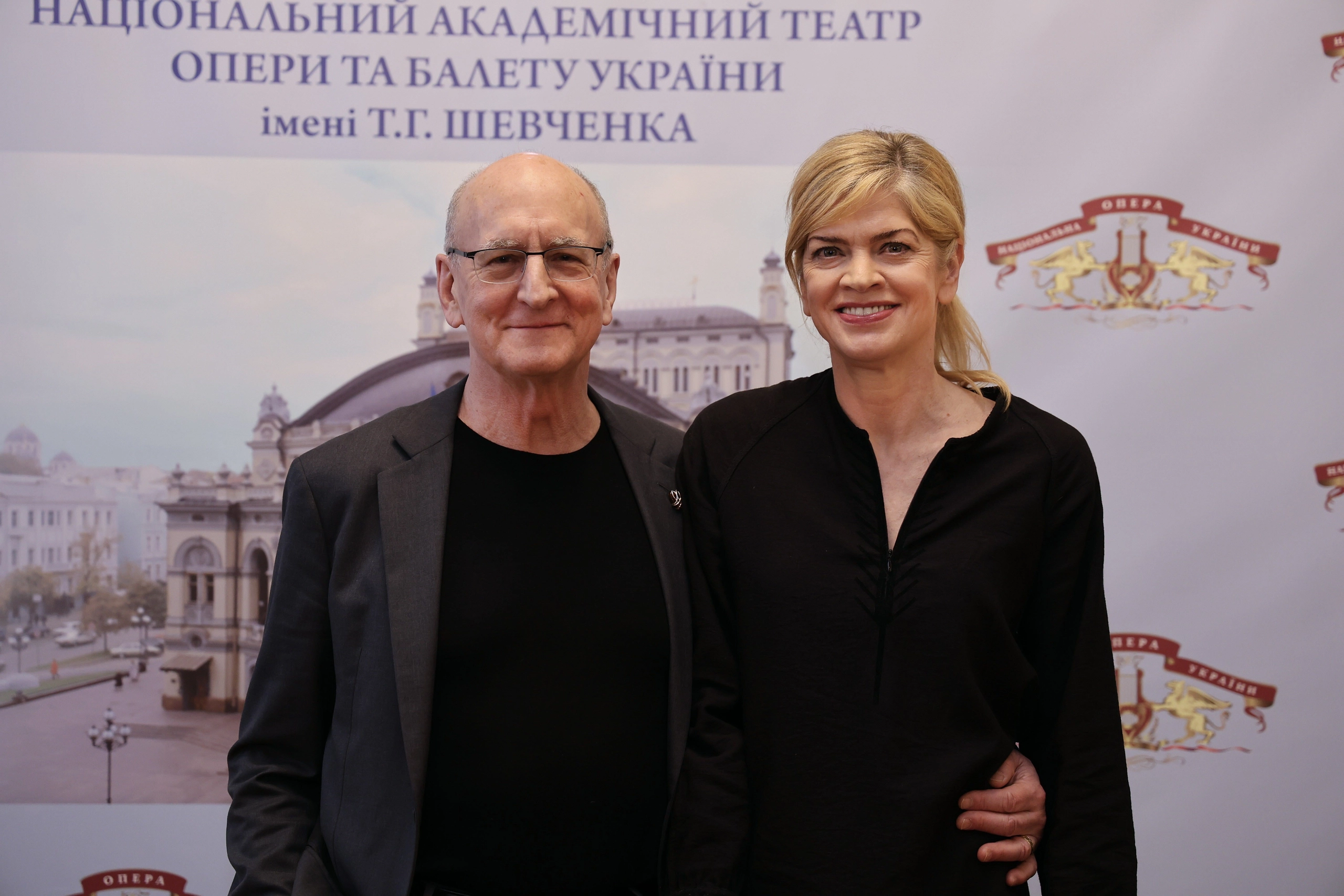
So, my orientation, it’s not just Ukraine, Ukraine is a big part of it, but I believe that art is political, it must be political, and can be used for the betterment of mankind.
So, we are presenting more new operas at the Met. Since we returned from the pandemic, we’ve been presenting almost three new operas a year, some of them commissioned by the Met, some not commissioned but curated by the Met. And more so than any of the biggest opera companies in the world, we’re doing much more of this.
Because I think it’s important for opera companies. Opera is not just a piece of nice furniture; it has to actually engage the public. And also for the future of the art form.
Opera cannot exist in a vacuum, it has to be connected to the world. In the same way, visual art. Great visual artists are creating works of art that are commenting on the world around them.
Movies are doing the same thing. Opera must do the same thing. For art to survive, for art to thrive, for art to have a future, it has to be connected to the world in which we live.
So, I believe very strongly in that.
Which five words best describe contemporary Ukrainian art for you?
Five words?
Yes, five words.
I would say… I’ll give you four words. Nothing stops Ukrainian art.
You can also highlight the text and press Ctrl + Enter