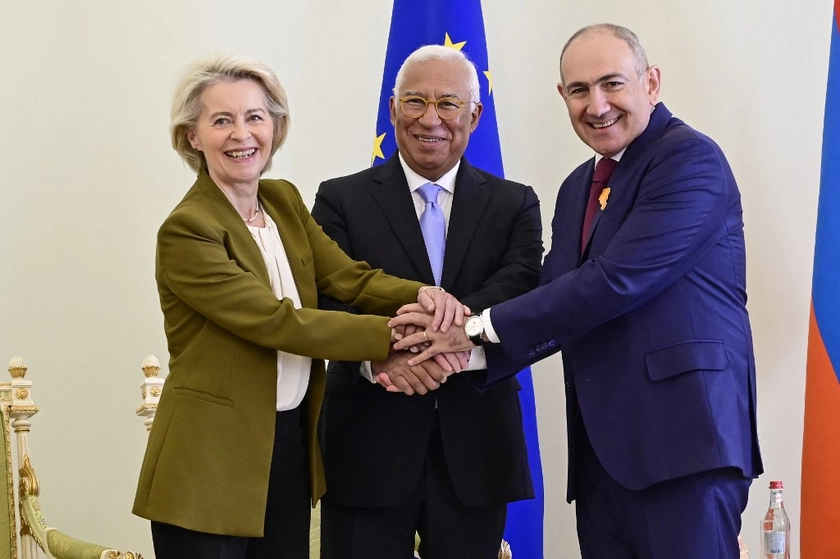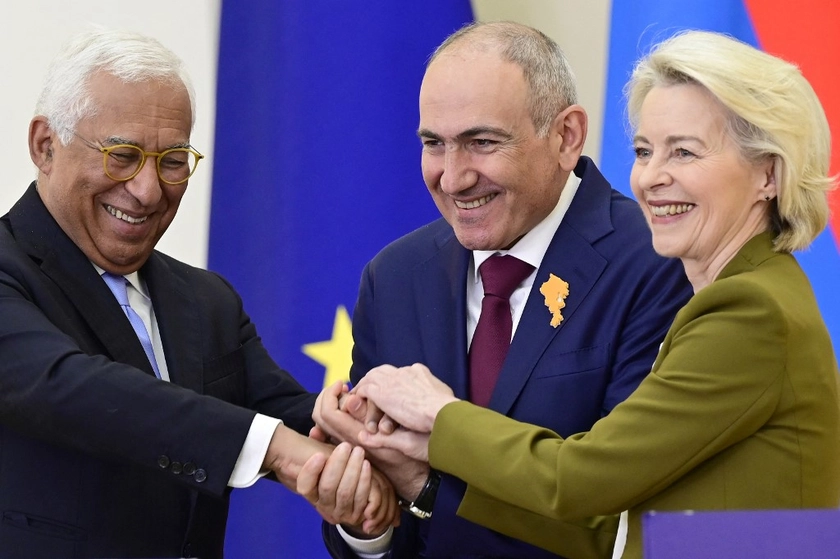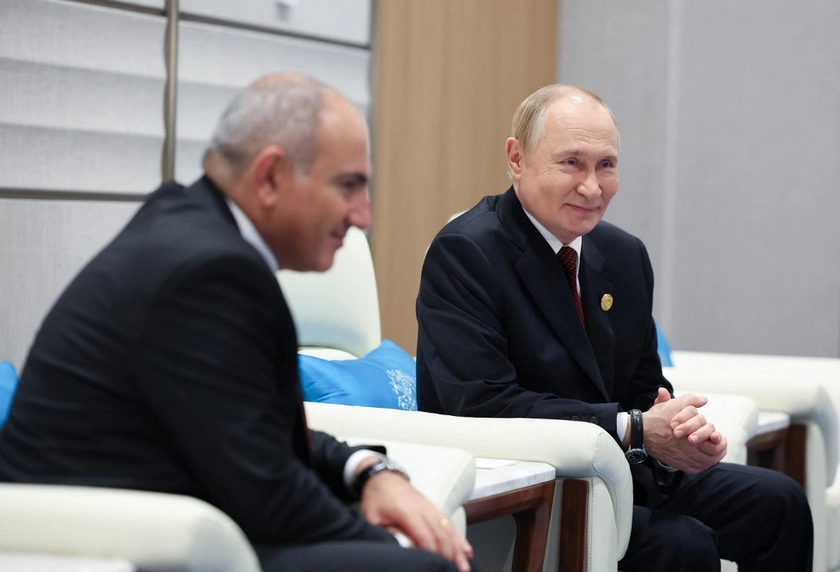



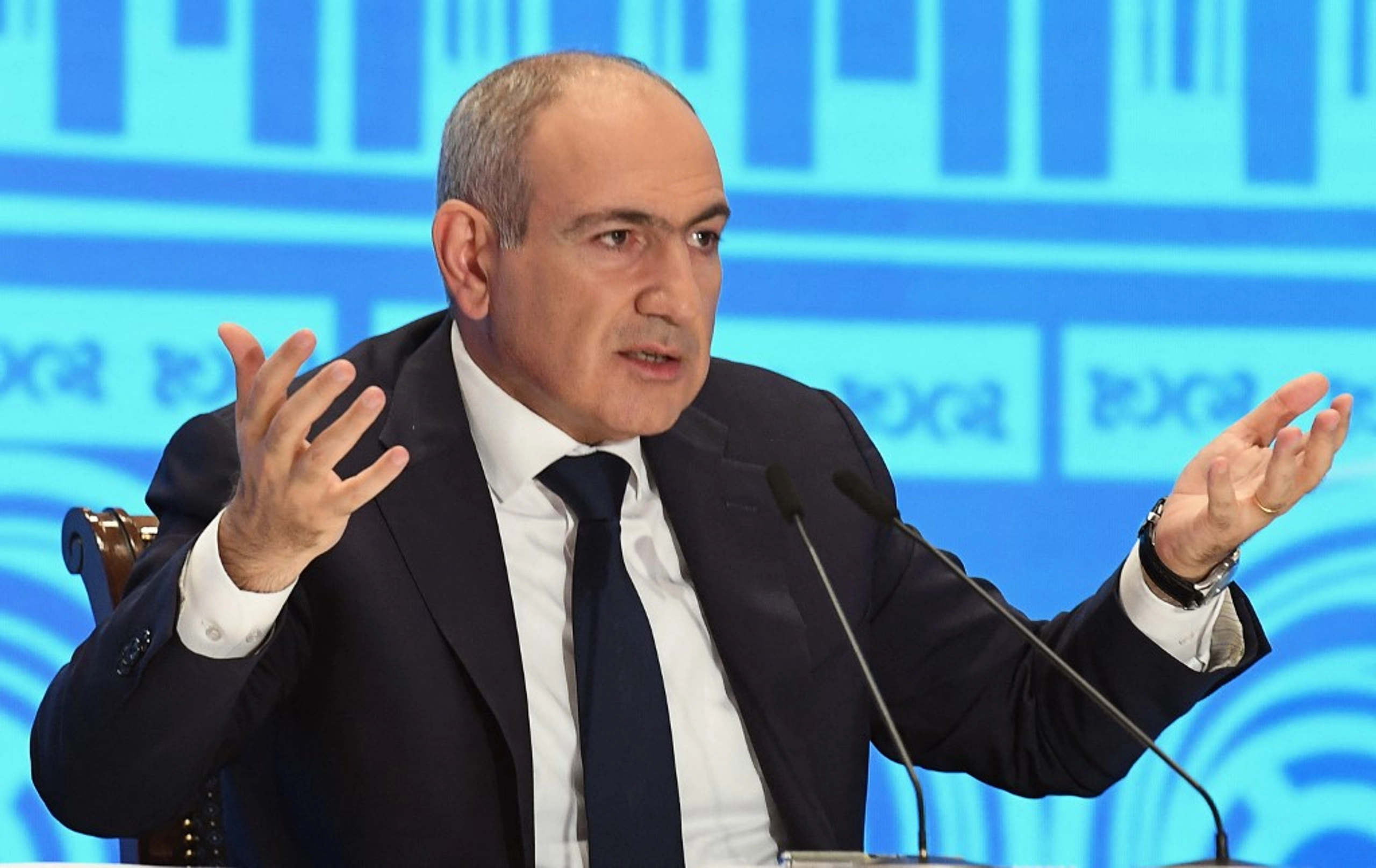
Armenian Prime Minister Nikol Pashinyan has pushed back against calls from Russia and three other Eurasian Economic Union (EAEU) members to hold a referendum on whether Armenia should choose between the European Union and the Russia-led economic bloc, arguing that such a vote has no basis at the current stage.
In a video published on his Facebook page on Monday, Pashinyan said Armenia would continue operating within the EAEU “until the choice between the European Union and the Eurasian Economic Union becomes unavoidable.”
JOIN US ON TELEGRAM
Follow our coverage of the war on the @Kyivpost_official.
At the same time, he stressed that any final decision on the country’s future should belong to Armenian citizens through a referendum.
The dispute comes just days before Armenia’s parliamentary elections on June 7, a vote widely seen as a key test of Pashinyan’s pro-European pivot and his ability to navigate mounting pressure from Moscow.
Pressure from Moscow and EAEU allies
The comments follow a coordinated push by Russia and three other EAEU members. On Sunday, leaders of Russia, Kazakhstan, Belarus, and Kyrgyzstan issued a joint statement urging Armenia to hold a referendum to clarify whether it intends to remain in the bloc or move closer to the EU.
They warned that Armenia’s European trajectory could pose risks to the economic security of the Eurasian union.
Tensions escalated further when Russian President Vladimir Putin, speaking at a post-summit briefing, compared Ukraine’s crisis to Armenia’s current situation, arguing that Kyiv’s conflict began with EU accession ambitions.
Kasparov: Ukrainian Flag in Sevastopol Is the Shock Russia Needs to Accept Empire Is Dead
Belarusian leader Alexander Lukashenko also urged Armenians to be “very careful” in choosing between Europe and the Eurasian bloc, warning against repeating Ukraine’s experience.
Relations deteriorate, pressure tactics emerge
Russia–Armenia relations have sharply deteriorated in recent months. Moscow has accused Pashinyan’s government of pursuing a pro-Western course, while Armenia has moved closer to the EU politically and diplomatically.
In response, Russia has introduced restrictions on imports of Armenian goods, adding economic pressure to already strained ties.
According to Reuters reporting, Russian officials have also discussed sending Russian-based Armenian citizens back to Armenia to vote in upcoming elections in support of opposition forces aligned against Pashinyan.
On Saturday, Russia reportedly recalled its ambassador from Yerevan for consultations following the EAEU dispute.
Ukraine stance adds to geopolitical shift
In a separate statement highlighting Armenia’s shifting foreign policy posture, Pashinyan said on May 7 that Armenia is “not allied with Russia on Ukraine,” signaling further distance from Moscow.
“We have sent humanitarian aid to Ukraine, and I have said that we are not allies of Russia on the issue of Ukraine,” he said, adding that Armenia maintains an independent position on the war.
The remarks followed Ukrainian President Volodymyr Zelensky’s visit to Yerevan for the European Political Community summit, which drew criticism from some pro-Russian voices.
Pashinyan reiterated that Armenia’s foreign policy is guided by national interests, including efforts to maintain regional stability while balancing ties between competing geopolitical blocs.
You can also highlight the text and press Ctrl + Enter

Russia Hit by 660-Drone Overnight Barrage Targeting Moscow, Crimea and Key Military Sites